Rugs play a pivotal role in the realm of interior design, serving not just as decorative elements but also as functional pieces that can transform a space. When you step into a room, the first thing that often catches your eye is the flooring, and a well-chosen rug can serve as a focal point that draws the eye and sets the tone for the entire area. Rugs can add warmth, comfort, and texture, making a space feel more inviting and cohesive.
They can also help to define areas within larger rooms, creating a sense of organization and flow. Moreover, rugs can act as a bridge between different design elements in a room. They can tie together various colors, patterns, and textures, creating harmony and balance.
For instance, if you have a room filled with eclectic furniture pieces, a carefully selected rug can unify these disparate elements, making the space feel more intentional and curated. Understanding the multifaceted role of rugs in interior design allows you to make informed choices that enhance both the aesthetic and functional aspects of your home.
Key Takeaways
- Rugs play a crucial role in interior design by adding warmth, texture, and visual interest to a space.
- When choosing the size and shape of rugs for different rooms, consider the furniture layout and traffic flow to ensure a balanced and functional design.
- The right material and texture for rugs can vary based on the room’s purpose and the desired aesthetic, with options ranging from cozy wool to durable synthetic fibers.
- Selecting colors and patterns for rugs should complement the room’s design, whether by adding a pop of color or tying together existing elements.
- Layering rugs can add depth and visual interest to a room, creating a dynamic and cozy atmosphere.
Considering the Size and Shape of Rugs for Different Rooms
When it comes to selecting a rug, size and shape are crucial factors that can significantly impact the overall look and feel of a room. You want to ensure that the rug fits well within the space, neither overwhelming it nor appearing too small. A common guideline is to choose a rug that allows for at least the front legs of your furniture to rest on it, which helps to create a sense of cohesion and grounding.
In dining areas, for example, a larger rug that accommodates the table and chairs—even when pulled out—can create an inviting atmosphere for gatherings. The shape of the rug is equally important. Rectangular rugs are versatile and work well in most spaces, but round or oval rugs can add an unexpected twist and soften the lines of a room.
If you have a long hallway or narrow space, a runner rug can enhance the area while providing comfort underfoot. By carefully considering both size and shape, you can select rugs that not only fit your space but also enhance its functionality and aesthetic appeal.
Choosing the Right Material and Texture for Rugs

The material and texture of a rug can greatly influence its appearance, durability, and comfort level. When selecting a rug, consider how it will be used in your home. For high-traffic areas like living rooms or hallways, durable materials such as wool or synthetic fibers may be ideal due to their resilience and ease of maintenance.
Wool rugs are particularly favored for their natural stain resistance and softness underfoot, making them a popular choice for family spaces. On the other hand, if you’re looking for something plush and luxurious for a bedroom or reading nook, consider materials like silk or shag. These textures can add an element of coziness and warmth to your space.
Additionally, think about how the texture of the rug will interact with other elements in the room. A smooth, flat-weave rug can provide a sleek contrast to plush upholstery, while a textured rug can add depth to minimalist designs. By thoughtfully choosing materials and textures, you can create a layered look that enhances your home’s overall design.
Selecting Colors and Patterns to Complement the Room’s Design
Color and pattern are essential components in selecting a rug that complements your room’s design. The right color can evoke specific emotions and set the mood for your space. For instance, warm tones like reds and oranges can create an inviting atmosphere, while cool tones like blues and greens can promote calmness and relaxation.
When choosing colors, consider the existing palette in your room; you may want to select a rug that incorporates one or more of these hues to create visual harmony. Patterns also play a significant role in defining the character of a room. A bold geometric pattern can add modern flair to an otherwise traditional space, while intricate floral designs may enhance a vintage aesthetic.
If your room features busy patterns on furniture or walls, opting for a solid-colored rug can provide balance and prevent visual clutter. Conversely, if your space is more subdued, a patterned rug can serve as an eye-catching focal point. By carefully selecting colors and patterns that resonate with your design vision, you can elevate your interior space significantly.
Layering Rugs for Added Depth and Visual Interest
Layering rugs is an innovative technique that adds depth and visual interest to your interior design. This approach allows you to combine different textures, colors, and patterns to create a unique look that reflects your personal style. For instance, placing a smaller patterned rug over a larger solid-colored one can create contrast while adding dimension to the space.
This technique is particularly effective in larger rooms where you want to define specific areas without using walls or furniture. When layering rugs, consider the scale of each piece; ensure that they complement rather than compete with each other. Mixing materials—such as pairing a soft wool rug with a jute one—can also enhance the tactile experience of the room.
Additionally, layering rugs can be an excellent way to incorporate seasonal changes into your decor; you might choose lighter fabrics in warmer months and cozier textures during colder seasons. By experimenting with layering techniques, you can achieve a dynamic look that keeps your space feeling fresh and inviting.
Arranging Rugs to Define Different Areas within a Room
Defining Zones with Rugs
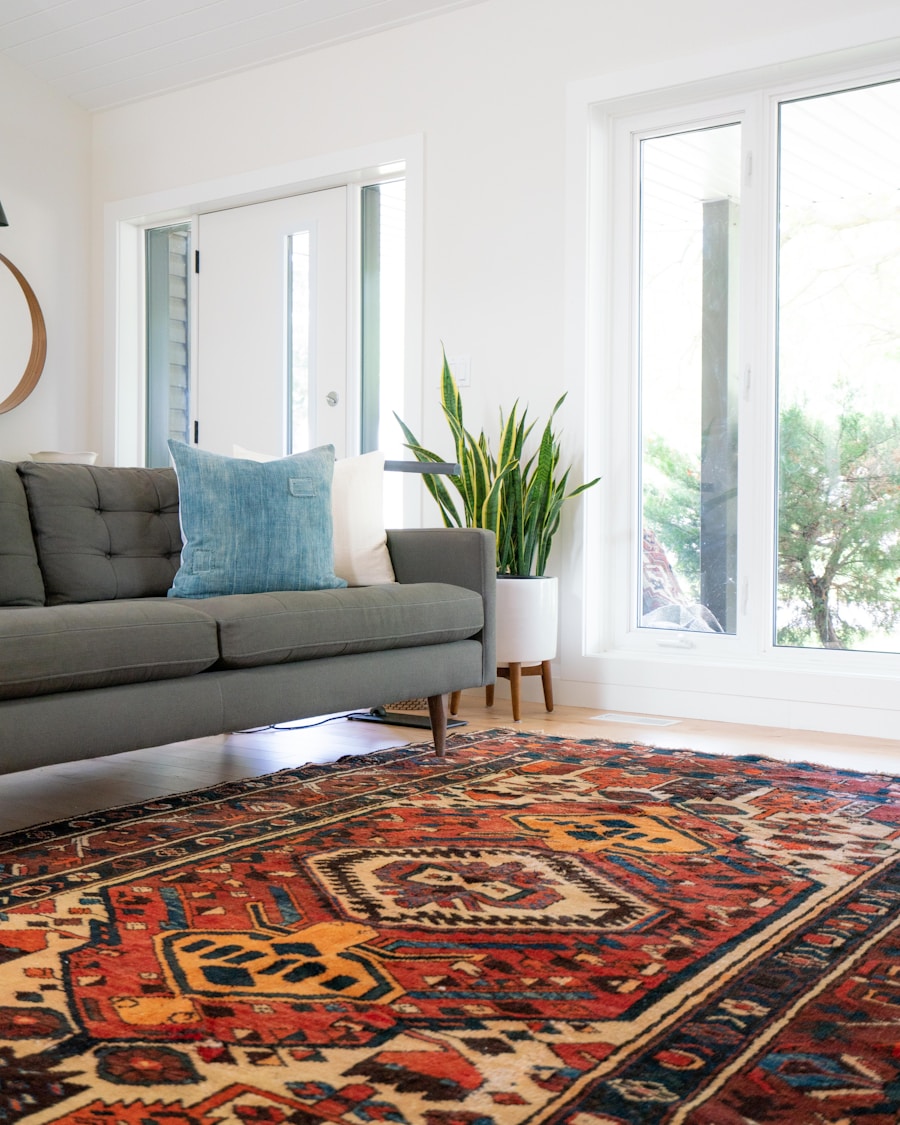
In spaces where multiple functions coexist, such as living rooms that also serve as dining areas, rugs can help create separate areas. For instance, placing a large area rug under your seating arrangement can create a cozy conversation nook while visually separating it from the dining area.
Furniture Placement and Rug Edges
When arranging rugs to define spaces, it’s essential to consider how furniture placement interacts with the rug’s edges. Ideally, furniture should sit on or at least partially on the rug to create an integrated look. This approach helps to create a sense of harmony and balance in the room.
Enhancing Functionality and Aesthetics
By thoughtfully arranging rugs in this way, you can enhance both functionality and aesthetics in your home. In smaller spaces, using smaller rugs or runners can help guide movement through the area while still providing comfort underfoot. With a little creativity, rugs can become a powerful tool for creating a functional and beautiful living space.
Incorporating Rugs into Different Design Styles, from Modern to Traditional
Rugs are incredibly versatile and can seamlessly fit into various design styles—from modern minimalism to traditional elegance. In modern spaces characterized by clean lines and neutral palettes, you might opt for geometric patterns or bold colors that serve as statement pieces without overwhelming the overall aesthetic. A simple yet striking area rug can anchor the room while allowing other design elements to shine.
Conversely, traditional interiors often benefit from richly patterned rugs that evoke history and craftsmanship. Persian or Oriental rugs with intricate designs can add warmth and character to classic furnishings while enhancing the overall elegance of the space. By understanding how different styles interact with various rug designs, you can make choices that not only complement but also elevate your home’s unique character.
Maintaining and Caring for Rugs to Ensure Longevity and Beauty
To keep your rugs looking their best over time, proper maintenance is essential. Regular vacuuming is crucial to remove dirt and debris that can wear down fibers over time; this is especially important for high-traffic areas where dirt accumulates quickly. For spills or stains, prompt action is key—blotting rather than rubbing will help prevent damage while ensuring that stains don’t set in.
In addition to regular cleaning, consider professional cleaning services for deeper maintenance every few years, especially for delicate materials like silk or antique rugs. Rotating your rugs periodically can also help prevent uneven wear from foot traffic. By investing time in care and maintenance, you ensure that your rugs remain beautiful focal points in your home for years to come.
In conclusion, rugs are much more than mere decorative items; they are integral components of interior design that contribute significantly to both aesthetics and functionality. By understanding their role in creating warmth and defining spaces, considering size and shape carefully, choosing appropriate materials and textures, selecting complementary colors and patterns, layering effectively, arranging thoughtfully within rooms, incorporating them into various design styles, and maintaining them properly, you can elevate your home’s interior design significantly. With these insights in mind, you are well-equipped to make informed decisions about incorporating rugs into your living spaces.
FAQs
What factors should I consider when selecting a rug for a room?
When selecting a rug for a room, consider the size of the room, the existing furniture and decor, the color scheme, and the overall design style of the room.
How do I choose the right size rug for a room?
To choose the right size rug for a room, measure the size of the seating area and select a rug that is large enough to fit all the furniture within the area. It’s important to leave a border of flooring around the rug to create a balanced look.
What are some tips for arranging rugs in a room?
When arranging rugs in a room, consider layering rugs for added texture and visual interest. You can also use rugs to define different areas within a room, such as a seating area or a dining area.
How can I use rugs to complement the design of a room?
To complement the design of a room, choose rugs that enhance the color scheme and style of the space. For example, a patterned rug can add visual interest to a neutral room, while a solid-colored rug can provide a grounding effect in a room with bold patterns and colors.